 www.frogfish.ch

Histiophryne sp.
Several undescribed Frogfish Species - Mehrere nicht beschriebene Anglerfisch-Arten
All frogfish-species (list / color / image) - Alle Anglerfisch-Arten (Liste / Farben / Bild)
| There seem to be several very small frogfish species that haven't been described yet (see Bare Island frogfish and Lembeh frogfish). |
|
Möglicherweise gibt es noch mehrere sehr kleine Anglerfisch-Arten, welche noch nicht wissenschaftlich beschrieben wurden (siehe Bare Island Anglerfisch und Lembeh Anglerfisch). |
|||||||||||||
| On this page are photos of 4 more so far undescribed species that might possibly also be of the Genus Histiophryne, since they are very small and lack a distinct lure. What seems to be similar in all these frogfishes is, that they seem to imitate corals or tunicates with patterns on their skin. The photos are from Papua New Guinea, Taiwan and Southern Australia. |
|
Auf dieser Seite sind Fotos von 4 weiteren
bis jetzt unbeschriebenen Arten, welche möglicherweise ebenfalls
zur Gattung Histiophryne gehören, da sie sehr klein
sind und keine sichtbare Angel haben. Was diesen Anglerfischen gemeinsam
zu sein scheint, ist dass sie Korallen oder Seescheiden imitieren.
Die Fotos stammen aus Papua-Neuguinea, Taiwan
und Süd-Australien.
|
|||||||||||||
|
|
|||||||||||||||

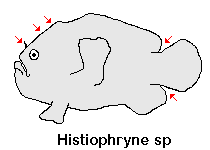
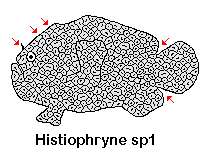
Characteristics - Histiophryne sp. - Merkmale
|
|||||||||||||||||
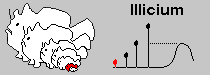
| Illicium
and Esca: |
|
Illicium
und Esca: |
|||||||||||||||
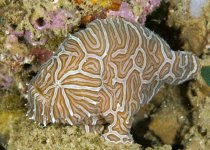
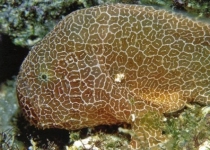
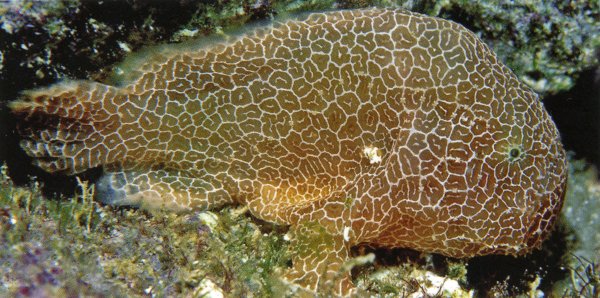
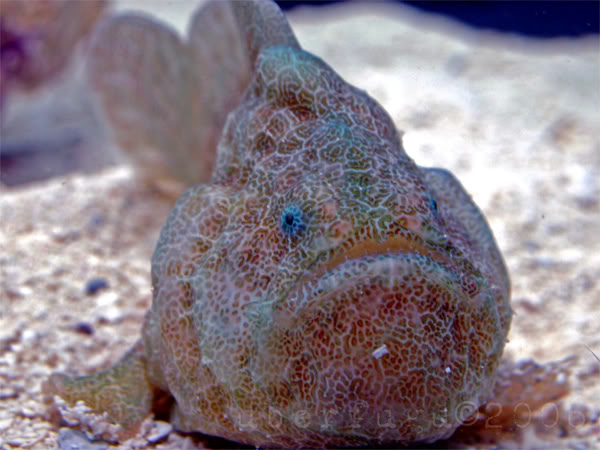
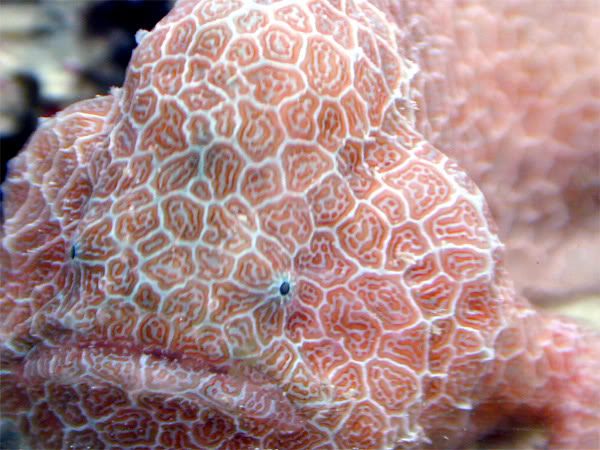
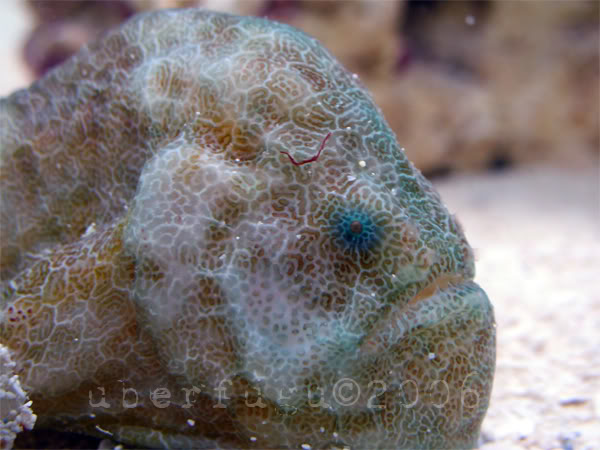
Histiophryne sp.1Frogfish with honeycomb pattern (Papua New Guinea)
|
|||||||||||||||||
| |
|
|


|
Undescribed Frogfish (this frogfish is identified in books
as Histiophryne
cryptacanthus but looks completely different to
that species. More likely a new species. This species of
Histiophryne has a honeycomb pattern which looks like the
patterns on stony corals and formed by tunicates. |
|
Nicht beschriebener Anglerfisch (dieser Anglerfisch wird in Büchern als Histiophryne cryptacanthus identifiziert aber sein Aussehen ist komplett anders. Eher eine neue Art). Diese Art von Histiophryne zeigt ein Wabenmuster welches an die Muster der Steinkorallen oder von Seescheiden erinnert. |
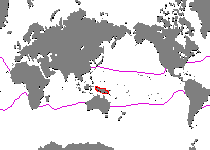
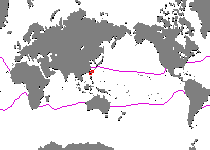
| Found in Papua New Guinea (reference p 126 for photo by Rudie Kuiter taken there). This photo is used in several other books where it is identified as Histiophryne cryptacanthus. This species is much more widespread (reference p.367) and is found in Taiwan, Papua New Guinea, Philippines and Australia. |
Wurde in Papua-Neuguinea gefunden (Quelle S.126 für das Foto von Rudie Kuiter). Dieses Foto wurde auch für andere Bücher verwendet, der Anglerfisch wurde dort jedoch als Histiophryne cryptacanthus bezeichnet (Quelle S.367), eine Art, welche ein grösseres Verbreitungsgebiet hat, nämlich Taiwan, Papua-Neuguinea, Philippinen bis Australien. |

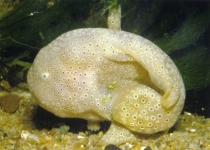
Two Histiophryne sp.1 in an aquarium. Please observe,
that the two animals have the exact same coloring (no variation
incoloring)
Zwei Histiophryne sp.1 in einem Aquarium. Bitte beachtet,
dass die zwei Tiere exakt die gleiche Färbung haben (keine
Farbvarianten)
Copyright Bryan Gim (Überfugu,
Photobucket
licence)
|
|
|
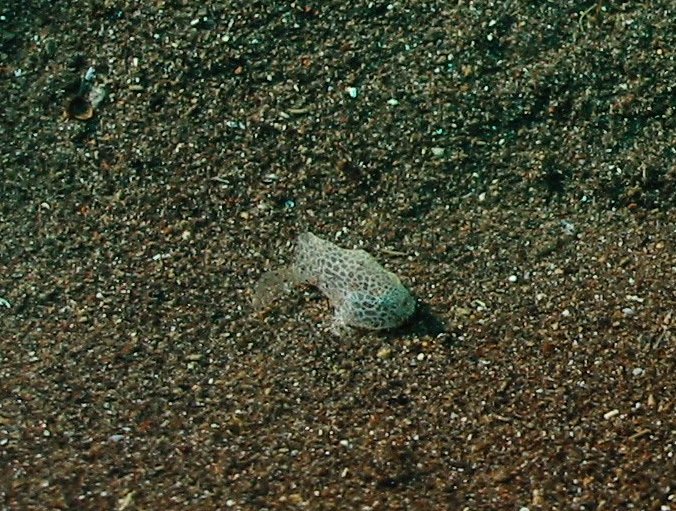
This frogfish has also a honeycomb pattern but in white, possibly
a juvenile of this species. Tulamben, Bali,
Indonesia
Dieser Anglerfisch hat auch ein Wabenmuster, aber in weiss, möglicherweise
ein Jungtier dieser Art. Tulamben, Bali,
Indonesien
Copyright Christiane Waldrich Seraya
(Bali)
|
|
|
Histiophryne sp.2 (Taiwan Frogfish - Taiwan Anglerfisch)
| |
|
|
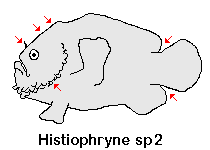

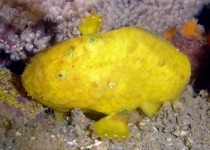
| Yellowish-brown frogfish from Taiwan of the Genus Histiophryne with whiskers on chin and on the head. Found on a rocky reef. |
|
Gelblich-brauner Anglerfisch der Gattung Histiophryne von Taiwan mit Barteln am Kinn und am Kopf. Auf einem steinigem Riff gefunden. |

Connie Cheng, Taiwan
Video edwardw67 YouTube
Histiophryne narungga
| |
|
|
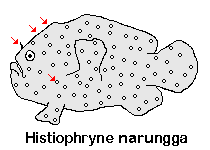
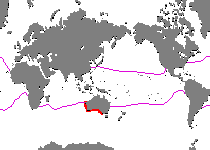

| Pietsch & Grobecker write that 38% of the examined specimens of Histiophryne cryptacanthus, have "numerous white edged, orange or reddish brown ocelli on head, body and fins", others are covered with tiny reddish-brown spots (reference p . 257). |
|
Pietsch & Grobecker schreiben, dass 38% der von ihnen examinierten Histiophryne cryptacanthus "zahlreiche weiss umrandete, orange oder braune Ocelli auf Kopf, Körper und Flossen" aufwiesen und weitere Exemplare mit kleinen rot-braunen Flecken bedeckt waren (Quelle S. 257). |
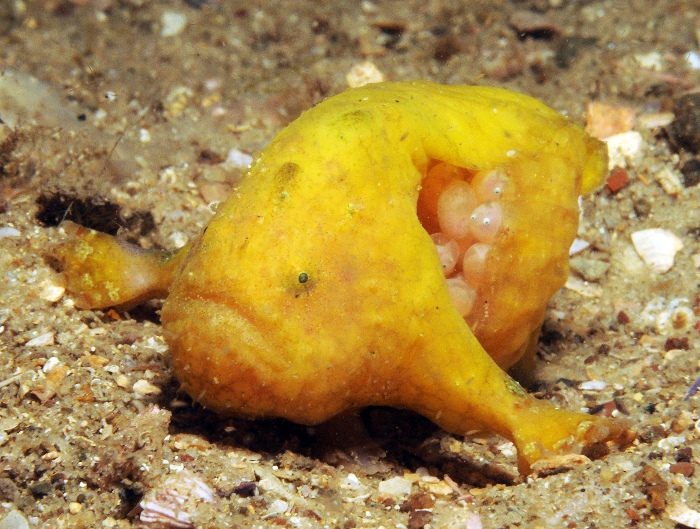
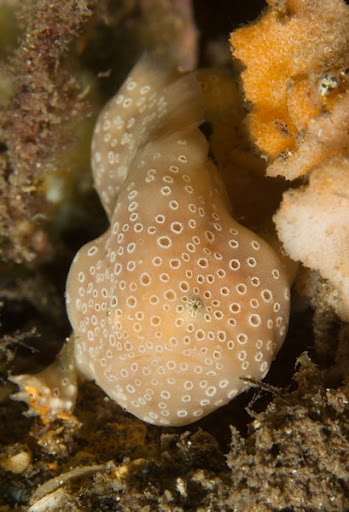
| This species has been found in South Australia and is identified as Histiophryne cf cryptacanthus in some books (reference p 126). A variation of Histiophryne cryptacanthus or a new species? |
|
Dieser Anglerfisch wurde in Süd-Australien gefunden und wird in einigen Büchern als Histiophryne cf cryptacanthus identifiziert (Quelle S.126). Eine Variante von Histiophryne cryptacanthus oder eine neue Art? |
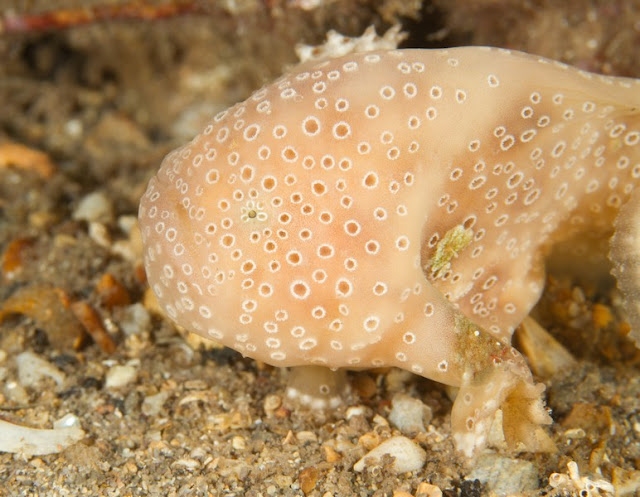
Copyright Phil Mercurio, Edithburg Jetty, South Australia
|
|
|
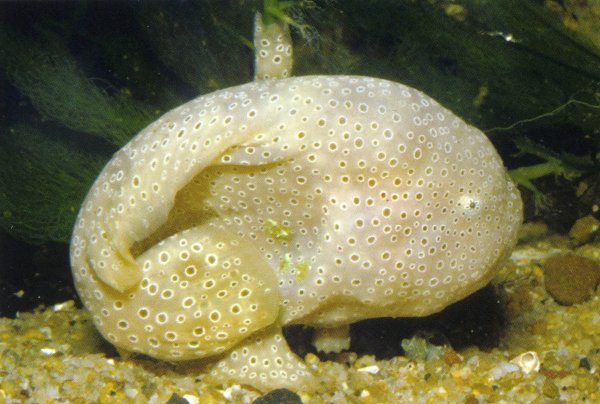

Histiophryne cf bougainvilli
Possibly a variation of Bougainville's Frogfish (Southern
Australia) - more information
Möglicherweise eine Variante des Bougainville's Anglerfisches (Südaustralien)
- mehr Informationen
|
|
|